Build vs Buy: Choosing the Right Test Automation Tool

When apps grow, teams scale, and products mature, engineering leaders turn to test automation to ensure quality at speed. And then the BIG question -
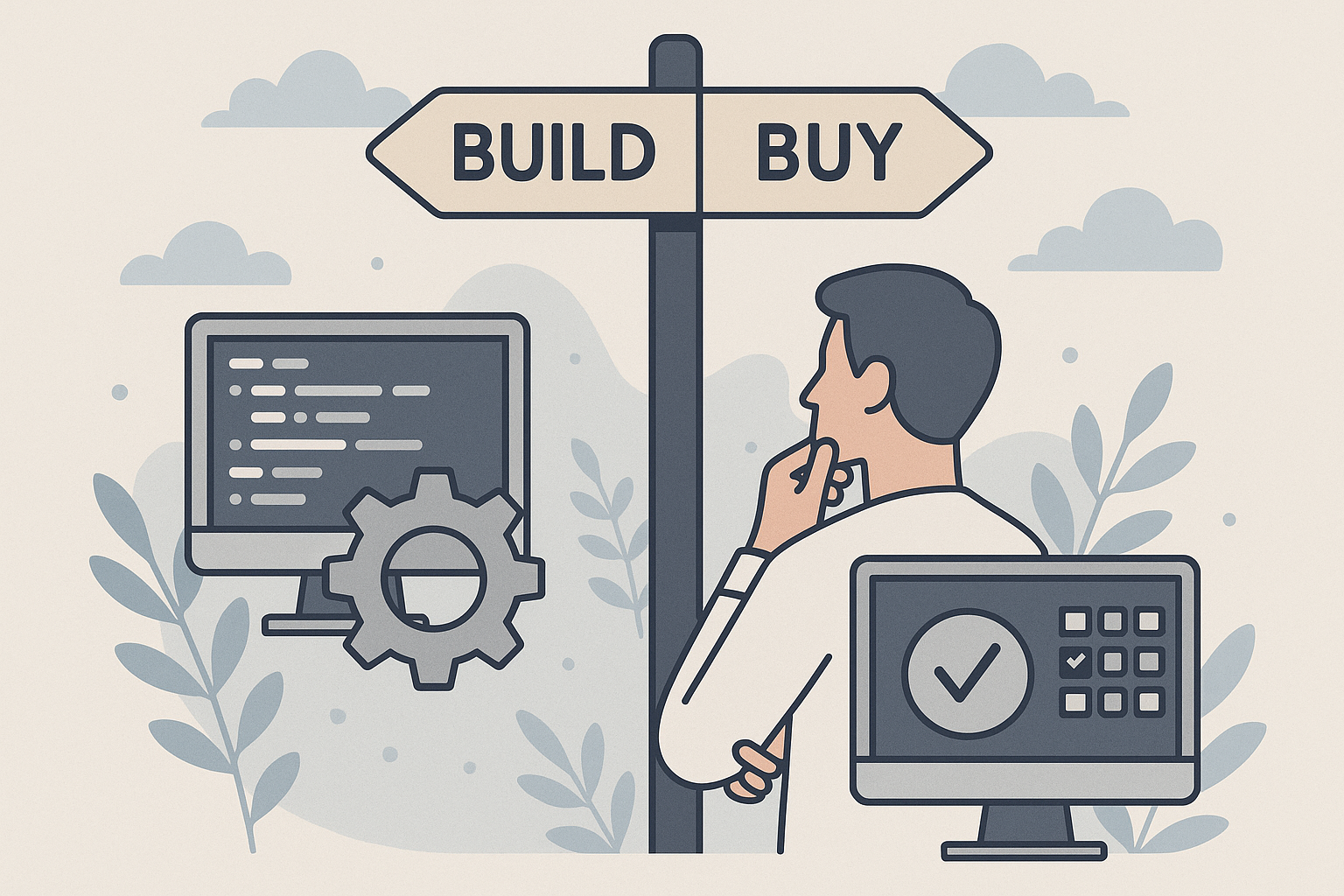
Should we build a custom test automation tool — or adopt an existing solution?
The age-old dilemma of Build vs Buy in test automation is exactly what we will be discussing in this blog. In this post, we’ll break down when it makes sense to build your own test automation framework, the hidden pitfalls to watch for, and why, in most cases, modern off-the-shelf tools might be the smarter bet. Let’s help you make the right call for your team.
When Teams Consider Building Their Own Test Automation Tool
In every organization that I have worked with - we go through a careful, yet tedious process trying to make the right choice with test automation.
This is a long term investment, it's not something that can easily be changed or be reworked on frequently.
The evaluation typically starts with understanding the application under test and whether off-the-shelf tools can truly meet its needs. Teams usually consider four key parameters:
Unique app complexities
- How complex is the application or system under test? Are there many dynamic components? Does the UI change frequently across loads, configurations, or datasets?
- How is data handled? Are end-to-end scenarios long or data-heavy, requiring significant pre-processing and post-processing?
- Does the app depend tightly on third-party services or integrations that could complicate test automation?
Frustrations with existing tools
- Has the team tried existing automation tools? What pain points did they face — flakiness, high maintenance, lack of flexibility?
- Are those pain points likely to persist with the current application?
- What is the expected effort required to build and maintain stable tests using those tools?
Compliance or data residency needs
- Many modern test automation tools are cloud-based. How will sensitive data (app credentials, database access, unreleased features) be stored?
- Will the automation platform meet internal data privacy, security, and compliance requirements — especially in an AI-driven testing world where data protection is paramount?
Desire for tight integration with internal systems
- Does your organization already rely on internal CI systems, SDKs, bug reporting tools, or test management platforms?
- Can existing commercial tools integrate smoothly into this environment, or would a custom solution with open source tools be needed to achieve full alignment?
Hidden Challenges of Building Your Own Test Automation Tool
Even when an application’s complexity seems to justify it, building your own test automation tool comes with significant hidden challenges. What may appear cost-effective at first often leads to greater long-term effort and risk.
Development effort
Open-source tools like Selenium, Playwright, or Appium may seem attractive because they have no licensing cost. But creating a custom test automation framework using these tools demands substantial developer time, expertise, and investment.
If you want to start automating tests right away, relying solely on open source may slow you down. You’ll first need to find or hire engineers with the right skills, and then dedicate time to design, build, and stabilize the framework.
Long-term maintenance burden
As your app grows in complexity and test cases increase, maintaining a custom automation framework becomes a full-time job.
Manual QA engineers often struggle with the coding required, creating a barrier for non-technical team members. Meanwhile, automation engineers and SDETs may become so focused on building and maintaining the tool that they risk losing sight of the testing mindset — shifting from testers to framework developers.
Keeping up with browser, OS, and platform updates
Framework maintenance also means keeping pace with constant change. Browser versions evolve, web drivers require updates, and test infrastructure must adapt to new OS and platform requirements. All of this adds to the overhead and can cause fragile tests or downtime if not proactively managed.
Limited Scalability of Test Case Authoring
When you rely on open-source tools for test automation, only technical team members — SDETs, automation engineers, developers — can meaningfully contribute.
This creates bottlenecks. Test automation often takes a backseat as teams struggle to keep up with feature development. Over time, automation backlogs grow, and teams may face the costly need to hire additional automation engineers or outsource the effort just to catch up.
When Buying/Adopting an Existing Tool Makes More Sense
Today’s market offers a wide array of no-code test automation tools, making it difficult to choose the perfect fit for your team. But often, rather than reinventing the wheel by building a custom framework, it makes far more sense to adopt an existing test automation solution — especially when time-to-value and team scalability are priorities.
Platforms like DevAssure and others come feature-rich, designed to handle even complex applications — from fintech platforms to canvas-based apps and Flutter web apps. Instead of investing months into building a custom framework for these applications, adopting a proven tool can accelerate your testing efforts while reducing hidden costs.
Key Reasons to Choose an Existing Test Automation Tool
✅ Faster Time to Value No-code solutions enable QA engineers — not just developers or SDETs — to contribute to automation. This opens the door for in-sprint automation from Day 0 of development, speeding up delivery cycles.
✅ Reduced Development and Maintenance Overhead While no-code tools come with a licensing fee, they save significantly on internal resource costs, engineering effort, and long-term maintenance.
✅ Built-in Support for Complex App Types Modern no-code platforms often support intricate use cases (e.g., multi-layer validations, API + UI workflows, visual regression) right out of the box.
✅ Support Ecosystem & Continuous Updates With a commercial tool, you gain access to vendor support, documentation, training, and community best practices — eliminating the need to solve every problem alone.
✅ Customizability (within limits) Even pre-built tools offer APIs, plugins, or scripting hooks for extensions. During evaluation, it's crucial to assess how far these customizations can meet your specific needs.
When Buying Makes Sense
- You want to automate from Day 0 and scale fast
- Your use cases are well-aligned with what modern tools offer
- Your team includes non-technical testers who need to author automation
- You value stability, support, and continuous innovation without extra overhead
Especially for simpler or well-supported use cases, adopting a no-code tool is often the smartest way to kickstart test automation without delay.
Test Automation Tool: Build vs Buy vs DevAssure Decision Matrix
| Dimension | Build Your Own Tool | Buy / Adopt Existing Tool | DevAssure (No-Code Platform) |
|---|---|---|---|
| Initial Cost | High (developer time, infra setup, hiring) | Low to medium (license cost) | Low to medium — subscription-based pricing with no upfront build effort |
| Time to Value | Slow — months to build before ROI | Fast — start automating in days/weeks | Very fast — no-code recorder & ready-to-use libraries enable Day 0 automation |
| Customization | Full control — can tailor to unique needs | Limited to tool’s extensibility (APIs, plugins) | High — no-code + support for custom scripts, APIs, NPM libraries |
| Maintenance Effort | Very high — browser/OS updates, infra scaling on you | Low — vendor handles updates | Very low — DevAssure manages updates, browser drivers, and platform changes |
| Talent Risk | High — relies on in-house experts | Low — widespread skills available | Very low — enables non-coders + SDETs + developers to contribute |
| Scalability & Stability | Needs engineering investment | Often battle-tested and scalable out-of-the-box | Scalable by design — battle-tested for complex apps (fintech, canvas, Flutter) |
| Compliance / Data Residency | Can build exactly to spec | May need to choose vendors offering on-prem/private cloud | SOC2 compliant + on-prem options available |
| Support / Ecosystem | None — you’re on your own | Vendor support + community + updates | Full vendor support + onboarding + documentation + community resources |
| Innovation / New Features | All effort falls on your team | You benefit from vendor R&D | Active roadmap — Agents for TC Generation, Automation, Code analysis and more |
| Long-term Cost | High (hidden talent, infra, maintenance costs) | Predictable (license / subscription fees) | Predictable — subscription pricing, lower hidden costs |
🚀 See how DevAssure accelerates test automation, improves coverage, and reduces QA effort.
Ready to transform your testing process?
Frequently Asked Questions (FAQs)
Teams tend build their own test automation framework when they need to find a solution to test complex scenarios within their application. Other parameters that could potentially impact this decision would be - frustration with existing tools, compliance or data residency needs and the desire for tight integration with internal systems.